
Keep Two Hands Where They Help, Build Reach Elsewhere
Learn when to keep your tennis two-handed backhand in padel, when to release a hand, and how to practise returns, glass rebounds and compact contact.
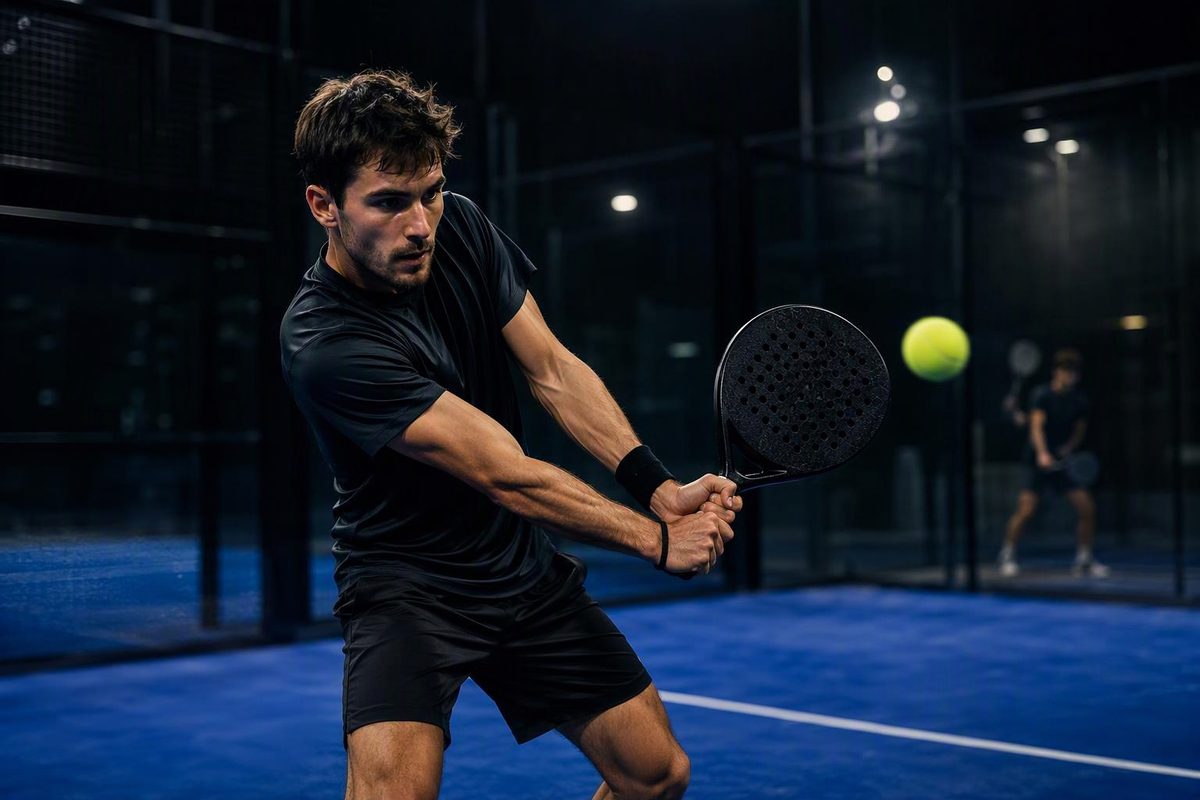
You can use a double-handed backhand in padel. If you already play one in tennis, keep it for comfortable groundstrokes and serve returns; you do not need to rebuild your backhand before your first session. Practise a one-handed option alongside it for balls that stretch you, leave little room beside the glass or make a two-handed swing feel cramped. Change according to the contact space, not simply because you have moved from tennis to padel.
Choose the ball situation and your contact space to find a backhand to practise.
Choose A Backhand To Practise
Practice Choice
Keep Two Hands If They Feel Comfortable
Use a short, balanced swing. You do not need to replace an established two-handed groundstroke on an easy ball.
Check: finish balanced and bring the racket back in front for the next shot.
Limits Of This Choice
This is a practice guide, not a rule or a guarantee. Two-handed strokes are legal, including after a glass rebound. Judge the actual contact space; a wall ball does not automatically require one hand.
Extra reach does not replace footwork. If contact is cramped, adjust your spacing rather than relying only on a hand change. For a one-handed stroke, use the support hand in preparation and release it before the forward swing.
Sources: PadelMBA’s one- versus two-handed comparison and the practice plan in this article; FIP Rules 12–14 for legality.
Two hands on one racket are not a double hit. The FIP rules do not prohibit a two-handed stroke, including after a glass rebound. The usual return rules still apply: hit with the racket and return the ball before its second floor bounce. See the FIP rules, Rules 12–14.
That settles legality, not technique. A legal stroke can still be a poor choice for the ball in front of you. Keep two hands when you can reach contact comfortably and recover without forcing the swing. Have another option when keeping both hands attached prevents that.
Two Hands Help On Comfortable Balls, Not Every Ball
A two-handed backhand can feel stable when a fast ball arrives within comfortable reach. The trade-off is reduced reach and less freedom to produce slice, or backspin. PadelMBA’s comparison identifies those advantages and limitations and recommends practising both options if you want to combine them.
For a tennis player with an established two-handed backhand, that makes it a useful starting stroke. You can concentrate on reading the ball and shortening your preparation rather than changing your hands and learning the walls at the same time.
Use this practice plan:
| Situation | What To Practise |
|---|---|
| Comfortable ball after the bounce, away from the glass | Keep both hands if you can make a short, balanced swing. |
| Serve return within easy reach | Use your familiar two-handed stroke, prioritising direction over pace. |
| Low ball or ball stretching you sideways | Practise a one-handed stroke to gain reach. |
| Awkward back-glass rebound | Work on a one-handed return rather than forcing both hands to stay attached. |
| Backhand volley | Practise a compact one-handed option separately from your groundstroke. |
This is a practice plan, not a rule that every low ball or wall rebound must be played one-handed. A low ball directly beside you may still be manageable with two hands. A glass rebound that comes into comfortable space may be manageable too. Judge the actual height, distance and room available.
Likewise, switching to one hand does not automatically solve poor positioning. If you crowd the ball, first look at where your feet have taken you. Extra reach helps when the ball is genuinely stretching you; it should not become a substitute for moving into a comfortable hitting position.
Shorten The Tennis Swing Before Rebuilding The Stroke
The biggest adjustment may be the swing, not the number of hands. The LTA’s guide for tennis players emphasises short, sharp racket movements and control rather than large swings for power.
Start with an easy feed away from the walls. That lets you separate the mechanics of the stroke from the additional task of judging a rebound. Keep your familiar two-handed contact, but remove any preparation that makes you late or leaves you struggling to recover.
- Set your hands. Start with your dominant hand in a continental, or hammer, grip. Place your other hand above it on the handle. Do not force an uncomfortable hold if the handle is too short.
- Turn early. Turn your shoulders towards the backhand side and take the racket back with them. Avoid a large loop behind your body.
- Adjust with your feet. Use small steps until the ball is comfortably beside and slightly in front of you—not trapped against your torso.
- Send the racket forward. Begin with a simple controlled stroke rather than a hard drive or an exaggerated brushing action.
- Recover immediately. Bring the racket back in front and prepare for the next ball.
The checkpoint is the finish: you should be balanced, with room to swing and ready to move again. If contact feels cramped, fix your spacing before adding speed. If you reach the ball comfortably but finish with the racket wrapped far around you, try a smaller swing on the next feed.
Do not turn “compact” into “no preparation.” You still need to turn and place the racket where it can move forward comfortably. The aim is to remove unnecessary movement, not to jab at the ball from a fixed, front-facing position.
Handle space is a separate issue. If your upper hand cannot sit comfortably, do not squeeze both hands into place simply to preserve your tennis stroke. Try the hold during gentle feeds. If the problem is the hold itself rather than your timing, use those feeds to begin learning the one-handed option instead.
Keep The Familiar Return When You Have Room
A serve return within easy reach is a sensible place to retain your two-handed backhand. Begin with a broad target and a controlled swing. You are testing whether you can direct the ball and recover, not whether you can reproduce your hardest tennis return.
Separate a comfortable direct return from a serve that puts you close to the glass. The fact that both are backhands does not mean they require the same preparation or contact point. If you are stretched or crowded, the familiar stroke may no longer be the easiest one to use.
When practising, ask for similar serves rather than judging the technique from unrelated balls. A successful two-handed return on an easy serve and a missed one-handed return on a much harder serve tell you little about the hand choice. Compare strokes on feeds you can reasonably reach with either option.
If the two-handed return is controlled and leaves you balanced, keep it. If you repeatedly feel trapped at contact, check your movement and preparation before deciding the stroke is wrong. The useful distinction is between a familiar stroke that needs a smaller swing and a ball that genuinely needs more reach.
Let The Glass Create Contact Space
Imagine this point sequence: you return a serve with two hands, then an opponent volleys deep towards your backhand corner. If the ball’s depth and pace will carry it to the back glass, create room rather than forcing a cramped interception. Let it bounce on the floor and rebound from the glass, then hit before the next floor bounce.
The adjustment is first a decision about the ball’s path. Changing to one hand will not rescue a swing made before you have understood where the rebound is going. Watch the ball through the rebound and use your feet to find space for contact.
The LTA’s back-glass guidance recommends early preparation, small adjustment steps and control over power. The glass can buy time, but you still need space to swing.
For the shot after the rebound, use one hand if keeping both on the handle restricts your reach. Prepare that option before swinging forward rather than trying to change midway through contact. The Padel School’s one-handed backhand guidance uses the support hand to guide preparation, then releases it for the forward swing.
That gives you a practical bridge between the strokes. Your support hand still has a job during preparation; you are not simply dropping it and hoping the racket stays organised. Practise the release on a gentle feed so you can feel the difference between guiding the racket back and keeping both hands attached through contact.
Do not make “glass ball” an automatic instruction to release a hand. If the rebound comes into comfortable space and you can make a balanced two-handed return, that option remains available. The one-handed stroke is there for the rebound that leaves you reaching, low or awkwardly positioned—not because the wall changes the legality of your backhand.
For the wider direct-return versus glass decision, use our padel backhand guide.
Practise The Backhand Volley Separately
Do not assume that keeping a two-handed groundstroke means using it on every backhand volley. Practise a compact one-handed volley as its own shot, rather than carrying your groundstroke swing forward to the net.
Use gentle feeds and keep the task narrow: prepare the racket, meet the ball under control and return to a ready position. Avoid measuring the volley by how hard it travels. For this practice, the useful outcome is a repeatable contact that does not leave you off balance or still finishing your swing when the next ball arrives.
This also makes the purpose of the second stroke clearer. You are not replacing every two-handed backhand. You are building an option for a different contact situation, just as you are doing for stretched balls and awkward rebounds.
Compare Both Strokes With The Same Feeds
With a partner feeding across the net, start behind the service line. Use a broad target through the middle so the comparison is about control rather than hitting close to a boundary.
- Ten comfortable feeds: return with two hands towards the broad target.
- Ten similar feeds: use one hand, with the other hand guiding preparation before releasing for the forward swing.
- Ten deeper feeds: ask for balls that bounce beyond the service line and reach the back glass. Let each rebound and return it before its second floor bounce. Start one-handed to practise the extra reach.
Keep the feeds gentle and count controlled returns, not winners. Alongside the count, compare balance, contact space and readiness for the next shot. A ball landing in the target after a desperate, off-balance swing is not the same practical result as a controlled return that leaves you ready.
The draft’s sources do not provide a success-rate threshold for choosing one stroke over the other. Do not turn this drill into a pass-or-fail test or infer a universal advantage from a small set of feeds. Use it to identify where your own stroke becomes uncomfortable.
If two hands work well on the comfortable feeds but restrict you on the rebounds, keep the two-handed groundstroke and continue building the one-handed option. If both strokes feel cramped on easy feeds, simplify the feed and work on spacing. If the one-handed contact is inconsistent despite comfortable reach, return to preparation and the support-hand release before making the feed harder.
Keep the wall practice distinct from the first comparison. A missed rebound can come from misreading the glass rather than choosing the wrong number of hands. Ask your partner to repeat a manageable rebound so you can practise its path without also chasing a different ball every time.
Keep A Backhand You Can Recover From
For your next session, retain the familiar two-handed stroke on comfortable groundstrokes and returns. Make the swing shorter, check that the handle accommodates your hands and judge each contact by balance and recovery.
Give the one-handed option deliberate practice on stretched balls, awkward glass rebounds and compact volleys. Learn to release the support hand during preparation rather than making a hurried change at contact.
You do not need to declare yourself a one-handed or two-handed padel player. Keep the stroke that works in comfortable space and build the alternative for the balls where that space disappears.