
Two-Handed Backhand in Padel: Keep It or Switch?
Keep your tennis two-handed backhand, but shorten the swing. Learn when to use two hands, when to release one, and how to practise both in padel.
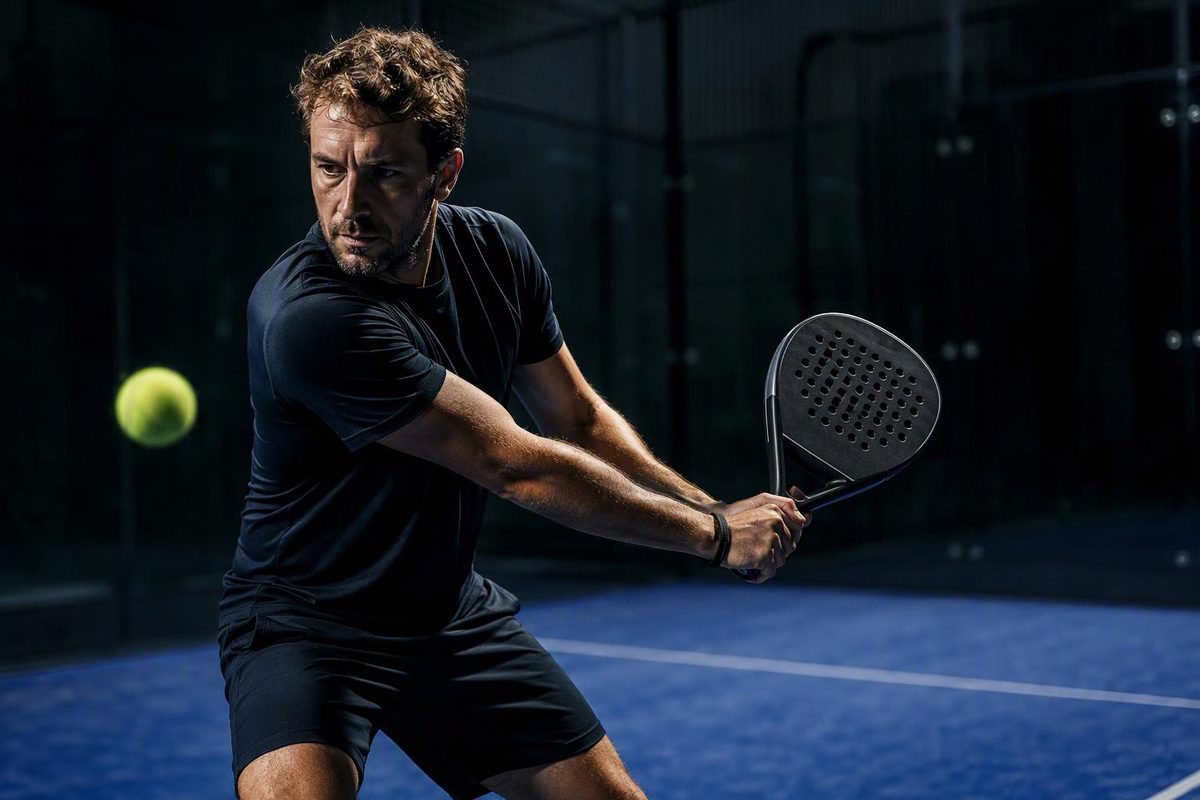
You can use a two-handed backhand in padel. If it is already a reliable tennis shot, you do not need to abandon it for your first session. Keep the familiar support of the second hand, but shorten the swing—and practise a one-handed option for balls that leave you reaching.
Two hands on the racket are not a fault under the FIP rules of padel. The question is which technique lets you make a controlled contact, not which is legal.
When two hands help—and when they get in the way
A two-handed backhand is a useful option for a direct groundstroke: a shot played after the ball bounces on the court, without waiting for a wall rebound. It can also give you a stable response to a fast ball when you have enough room to get both hands into position.
The trade-off is reach. PadelMBA’s backhand comparison identifies the extra support of two hands, but also their reduced reach and the greater flexibility of one hand on low balls and wall-rebound shots.
Use these practical cues:
- Comfortable distance, balanced stance: keep two hands if that is your dependable stroke.
- Ball low or well away from you: practise releasing the upper hand so you can extend the racket without dragging your whole body after it.
- Preparing a backhand volley: develop a compact one-handed option rather than automatically carrying over your tennis groundstroke swing.
Releasing a hand is a trained alternative, not a last-second rescue plan. Choose your hand setup during preparation, rather than changing it halfway through the forward swing. Start with easy feeds. Our basic padel backhand guide covers the wider technique.
Keep the second hand, lose the big tennis swing
For a right-handed player, the right hand sits lower on the handle and the left hand above it; reverse that for a left-hander. Both should fit comfortably. Do not force a cramped hold: NOX’s backhand guide flags handle space as a possible limitation for two-handed players.
As a starting setup, use a continental grip in your dominant hand, then add the second hand comfortably above it. Check that you can release that hand without having to rebuild your lower-hand grip.
For the stroke itself:
- Turn your shoulders early. Prepare when you recognise a backhand, not after the ball reaches you.
- Adjust with small steps. Leave enough space that your elbows are not trapped against your body.
- Use a short backswing. Do not take the racket into a large tennis loop.
- Contact in front and guide through the ball. Keep the racket face directed towards your target, then return to ready position.
These compact-swing cues follow the LTA’s padel groundstroke guidance. Your first aim is a repeatable return, not extra power from the second hand.
The glass decision comes first
Imagine you return serve with two hands. The next opponent’s volley travels deep, bounces on your side and heads towards the back glass.
Do not rush to hit it simply because your tennis backhand feels familiar. If the ball will rebound into usable space, prepare early, let it reach the glass and use small steps to meet the rebound. You must hit it before its second bounce on the court; the glass contact is not that second bounce. The LTA’s back-glass guide recommends early preparation, adjustment steps and control rather than power.
PadelMBA recommends one hand for back-wall rebounds. That is a technique recommendation, not a ban on two hands. Practise the one-handed option first on easy rebounds, especially those that stay low or leave you stretching. If you want to compare it with two hands, use comfortable feeds and check your spacing and balance rather than forcing extra power.
A short practice check
With a partner feeding from across the net, use gentle pace and a broad target through the middle. Take turns feeding and hitting:
- 10 direct backhands: two hands, short preparation, contact in front.
- 10 comfortable one-handed backhands: easy feeds, focusing on balance rather than speed.
- 10 back-glass feeds: the ball bounces on your court, hits the glass, then you return it before bounce two. Start one-handed; compare two hands only on rebounds with comfortable space.
Ask your partner to watch for one checkpoint: can you finish each shot balanced and ready again? If two hands repeatedly leave you cramped, first adjust your feet and spacing. If the ball remains out of comfortable reach, work on the one-handed alternative rather than forcing your tennis stroke onto every padel ball.