
Padel Backhand: Compact Technique, Glass Decisions and a Practice Drill
Learn a compact padel backhand, decide between a direct return and the back glass, correct tennis habits, and practise control in 15 minutes.
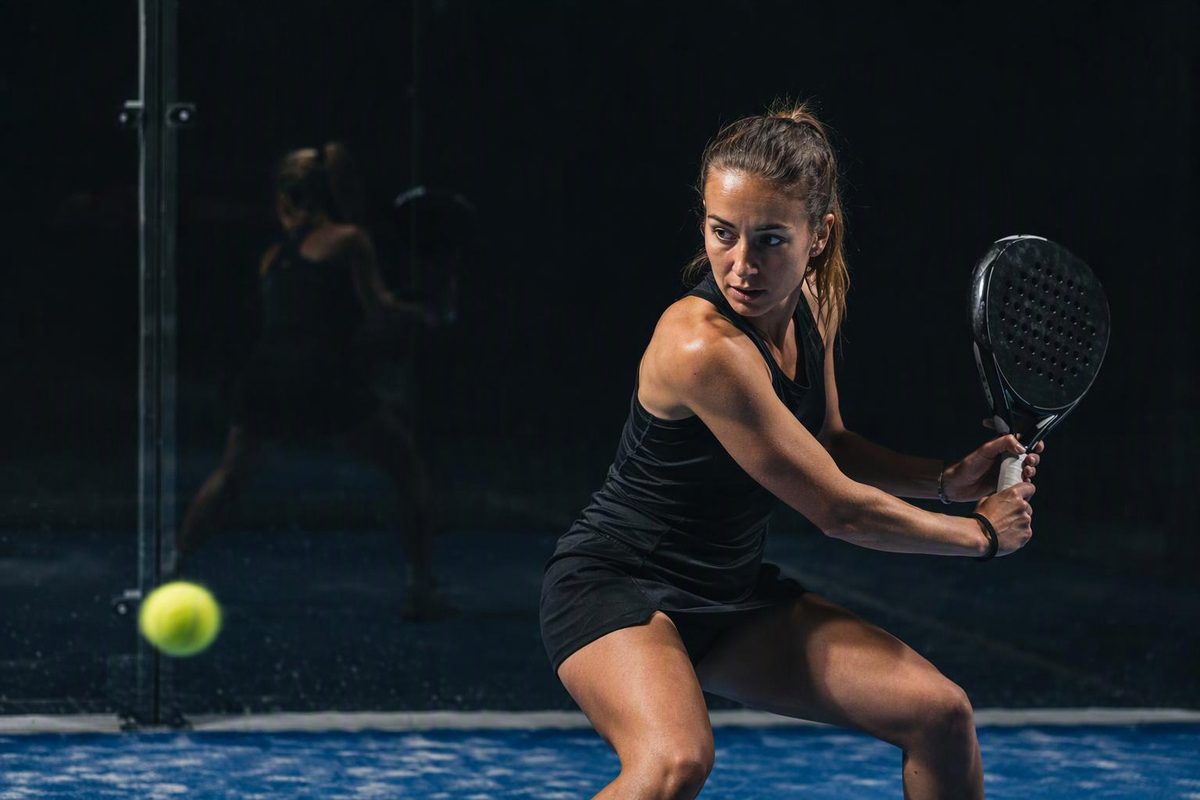
A dependable padel backhand is compact and controlled: turn early, make space, meet the ball slightly in front and guide it toward a useful target. For tennis players, the main change is usually less racket speed and a much shorter backswing.
The backhand is the groundstroke played on your non-dominant side—the left side for a right-handed player and the right side for a left-handed player. At the back of the court, you will play it either directly after the bounce or after a rebound from the glass.
The basic padel backhand in six steps
1. Start with both hands on the racket
Face the play with your knees relaxed, weight toward the front of your feet and racket in front. Use a continental grip as a practical beginner default. Hold the handle with your playing hand and rest your other hand lightly around the throat of the racket.
The support hand guides the racket during the turn and helps prevent the hitting arm from making a large, independent takeback.
2. Turn as soon as you read backhand
Rotate your shoulders and hips sideways while the support hand guides the racket back. Keep the racket around the expected contact height rather than lifting it behind your head.
Prepare early, but do not prepare big. LTA coaching guidance recommends early preparation and a short backswing to create more time and control in padel (LTA Padel).
Checkpoint: an opponent looking through the net should see your shoulder turn, not a long racket loop behind your body.
3. Move your feet to create space
Use short adjustment steps instead of reaching with the arm. Establish a stable, roughly sideways position with enough room for the racket to pass between your body and the ball.
For a right-handed player, the right foot will commonly become the front foot; for a left-hander, the movement mirrors. Treat that as a positioning cue, not a demand to plant the foot early. Keep adjusting until the bounce is clear.
If the ball crowds your hip, the problem usually began with your spacing rather than your swing.
4. Contact slightly in front
Release the support hand as the racket starts forward. Meet the ball slightly in front of your body and around the outside of your front hip—not so far ahead that your wrist collapses.
Use a simple, mostly horizontal path through the back of the ball. Think “turn, step, push”, with the racket face directed toward the target through contact. LTA coaches describe this as pushing through the back of the ball rather than using the large swing common in tennis (LTA Padel).
5. Start with a flatter ball
Learn a clean, controlled backhand before trying to carve every shot with underspin. This matters most on a low contact: chopping steeply down on a ball below waist height leaves less clearance over the net. The Padel School recommends learning the flat backhand first and using more slice on higher contacts (The Padel School).
“Flat” does not mean smashing the ball. It means using a straightforward racket path with little deliberate spin.
6. Finish balanced and recover
Let the racket continue toward the target, with the support arm moving back to help balance the turn. The finish should be long enough to guide the ball but short enough that you can return the racket to ready immediately.
Recover in relation to your partner. If both of you are defending, avoid stepping forward alone and opening a gap behind or between you.
Play the backhand now or use the back glass?
Make this decision before starting the forward swing. The service line is a useful beginner’s reference, but it is not a rule:
- Bounce clearly before the service line: usually move to the ball and play the backhand directly.
- Bounce beyond the service line: usually create room and let it rebound from the back glass.
- Slow, deep ball: you may still have time to take it directly.
- Fast ball: letting it reach the glass can give you more time and remove some pace.
This depth-and-speed framework comes from the LTA’s beginner groundstroke guidance (LTA Padel). Read the actual trajectory rather than applying the service-line reference mechanically.
If you choose the glass, turn early, use small steps and create room to read the rebound. Let the ball come away from the glass before striking; do not retreat until your back is almost touching it. LTA guidance likewise emphasizes early preparation, space and control rather than adding unnecessary pace (LTA Padel).
Under the FIP rules marked for application review on 1 January 2026, a ball remains in play after bouncing on your side and then contacting an inside wall or fence, but you must return it before its second bounce (FIP Rules of Padel).
Your swing stays compact after the rebound. What changes is your spacing and timing. You can compare the same decision on the padel forehand.
A simple point sequence
You and your partner are behind the service line while both opponents hold the net. An opponent plays firmly toward your backhand, and the ball lands deep beyond the service line.
- Call “mine” and turn your shoulders early.
- Use small steps to follow the ball’s path while creating room for its rebound.
- Let the ball bounce, strike the back glass and travel out toward you.
- Meet it at a comfortable distance with a short, flatter backhand.
- Send a controlled lob or low ball through the middle.
- Recover alongside your partner instead of following the shot alone.
Now change one detail: the incoming ball lands well before the service line. Move toward it and play directly after the bounce. Waiting for that shorter ball to reach the glass could force a very low contact or allow a second bounce.
What tennis players should unlearn
- The large takeback: it consumes time and makes clean contact harder near the walls.
- A tennis-sized two-handed swing: a two-handed backhand can work, but keep the preparation compact. If you use one hand to strike, let the other guide the racket during the turn.
- Heavy slice on every ball: first establish net clearance and depth with a flatter path, especially from low contact.
- Winner-first targets: from the back court, use the backhand to stay in the point, play through the middle or create time with a lob.
- Stepping across too early: turn and adjust, but do not lock the feet before you know where the ball will arrive.
A 15-minute backhand progression
Work on half a court with a partner feeding gently from the other side.
Five minutes: direct backhands. Ask for balls that bounce before the service line. Hit at about half pace toward a generous cross-court target. Count only contacts made slightly in front with a balanced finish.
Five minutes: decide early. The feeder alternates shorter and deeper balls. Say “now” before a direct backhand or “glass” before allowing the rebound. If you call late, slow the feed until you can read depth before moving.
Five minutes: add recovery. Play cooperative points. After every backhand, return the racket to the front and reconnect with your partner’s position. Aim for ten-ball rallies rather than winners.
Use one final checkpoint after each block: early turn, space from the ball, contact slightly in front, controlled recovery. If the swing grows as the feed gets faster, reduce the pace and rebuild those four cues.