
Padel volley tips for compact contact and patient net play
Learn beginner padel volley tips: prepare early, block fast balls, control low volleys and recover with your partner instead of chasing winners.
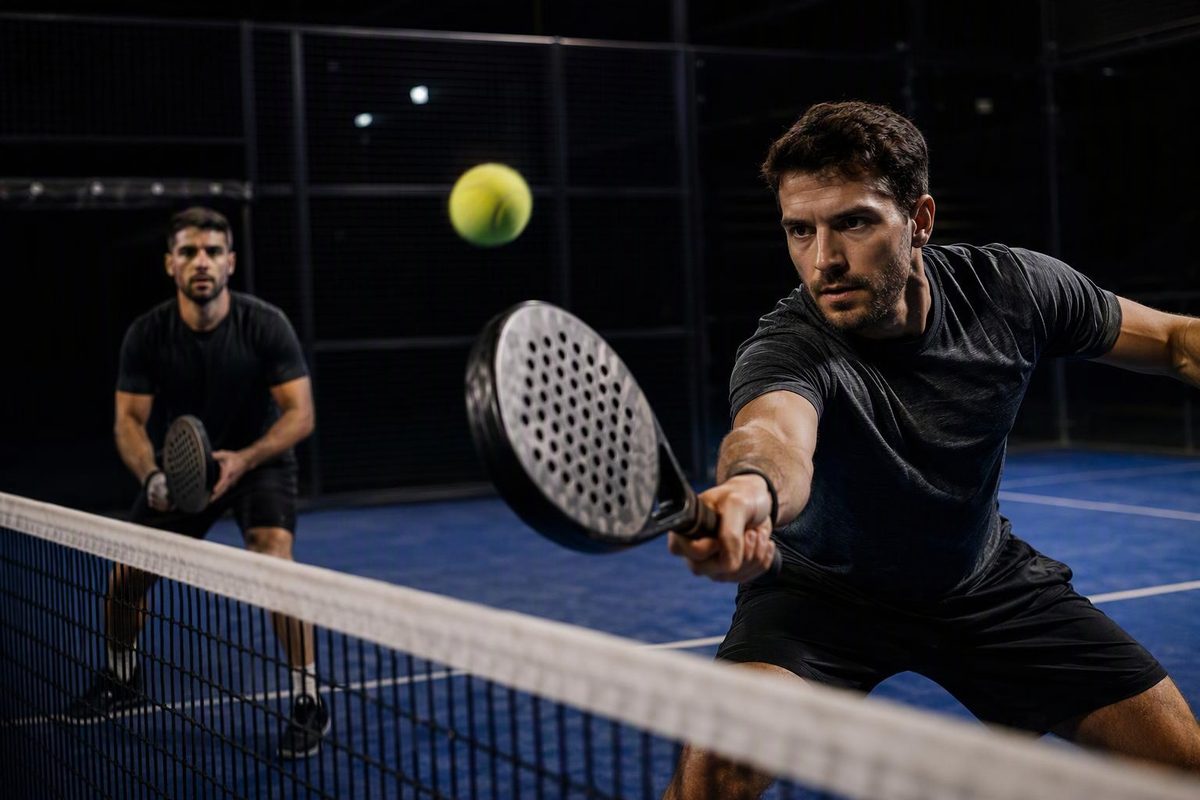
A padel volley is a shot played before the ball bounces. Your first goal is not to hit a winner: it is to make the opponents’ next shot difficult while keeping you and your partner ready at the net.
If you come from tennis, keep your compact blocking volley—but resist turning every comfortable ball into a put-away. In padel, a ball that bounces in the opponents’ court and then hits the glass is still playable: they can return it before its second ground bounce. That is why power alone does not guarantee a winner. See FIP’s rules, Rule 12.
One rule to remember: you cannot volley a serve. Let it bounce before returning it, as the LTA’s volley guide explains.
1. Start with the racket up and in front
Use a continental grip—the “hammer” grip—with the racket head up in front of your body. Support the racket with your non-hitting hand between shots, rather than letting it hang beside your thigh.
Keep your knees soft and leave enough room to move forward into a volley. Do not crowd the net so closely that you have no time to react or respond to a lob. The Padel School identifies both the continental grip and avoiding an excessively close net position as important foundations.
Checkpoint: can you prepare for either side without first lifting the racket from below your waist? If not, reset it higher. For the hand position, see our continental grip guide.
2. Turn, then block—not swing
Turn your shoulders enough to prepare the forehand or backhand, keeping the racket movement compact. Meet the ball in front of your body with a stable wrist.
When time allows, step towards contact with the opposite foot: left foot for a right-handed forehand volley, right foot for a right-handed backhand. Reverse those for a left-hander. Do not force a big step when a fast ball requires an immediate block.
The LTA’s coaching guide recommends a short racket path, contact out front and stepping into the shot.
Checkpoint: finish balanced and return the racket to ready position. If your follow-through leaves you unprepared for the next ball, shorten it.
3. Match the volley to the incoming ball
Use this simple decision:
- Fast ball: block it. Let the incoming pace help rather than adding a swing.
- Comfortable ball: use a short push towards a large, deep target.
- Low ball: bend through your legs, give the ball clearance over the net and prioritise keeping it in play.
The LTA distinguishes defensive blocks from deeper push volleys and more attacking slice volleys. Start with the first two; adding slice is a later refinement, not a requirement for a useful beginner volley.
On low balls, lower your body rather than reaching down with only your arm, as The Padel School advises. A ball below net height needs to travel upwards first—do not try to punch it down.
4. Choose a target before adding pace
For a comfortable practice volley, aim for the ball to bounce beyond the opponents’ service line, with plenty of margin from the side glass. The LTA uses that depth target in its volley drill.
Depth is a useful default, not a demand on every ball. When stretched or contacting low, choose a safer target and keep the rally alive. Avoid aiming at a tiny corner just because you are at the net.
5. Recover with your partner
After contact, reset your racket and move with your partner rather than admiring the shot. If one player shifts across, the other should adjust too; coordinated movement helps cover the court, as the LTA’s beginner guidance explains.
For a fuller starting-position guide, see padel doubles positioning.
Put the tips into one rally
You and your partner are at the net. A comfortable forehand arrives: turn, step and push it deep. The reply comes fast towards your backhand: block rather than swing. The next ball drops near your feet: bend your knees and lift a controlled volley over the net instead of forcing a winner.
To rehearse those choices with two players, put one volleyer at the net and one feeder at the back of the opposite court. Feed a comfortable forehand, a faster backhand and then a low ball, allowing time to reset between feeds. Keep the pace cooperative and check three things: contact in front, balance after the shot and racket reset before the next feed. Swap roles, then use the 20-minute beginner volley progression to practise depth and low-ball control separately.