
Four padel rebounding drills to get comfortable with the back glass
Practise padel wall rebounds with four beginner drills: learn the bounce sequence, create space, adjust to pace and choose when to use the glass.
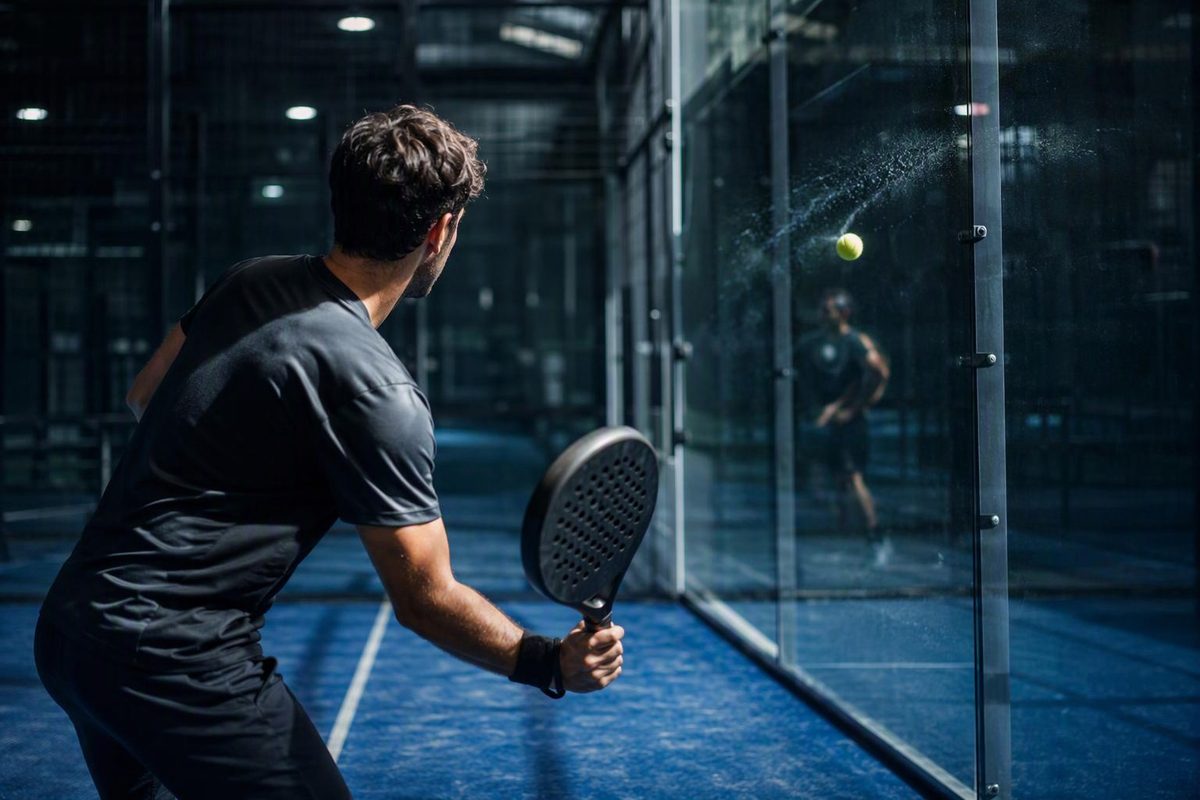
These rebounding drills teach you to return a ball after it bounces on the court and rebounds from the back glass. Start with predictable feeds, then add different speeds and a choice between hitting directly and using the wall.
If you come from tennis, the habit to change is treating every ball that passes you as an emergency. In padel, you can let a deep ball reach the glass—but you still need to move and prepare before it rebounds.
Know the sequence before practising
A normal back-glass return follows this sequence:
Opponent’s shot → first floor bounce on your side → back glass → your racket → over the net.
The wall rebound does not count as a second floor bounce. You must return the ball before it touches the floor again. An opponent’s shot that hits your glass before bouncing on your court is out. These distinctions follow FIP Rules 12–14.
Keep the first session to the back glass, away from the corners. Add side-glass-then-back-glass returns once you can manage a single-wall rebound.
Set up a 20-minute partner session
You need a padel court, rackets and a few balls. Wear your racket’s wrist strap and remove loose balls from the working area before each set of feeds.
For drills 1–3:
- The receiver starts behind the service line, with room to move toward or away from the back glass.
- The feeder stands a few steps in front of the receiver on the same side of the court, offset from the receiver’s hitting lane.
- Feed one ball at a time, gently enough for a controlled return. It should land beyond the service line and reach the back glass after one floor bounce.
- The receiver gently returns toward the feeder, who stops the ball before feeding again.
Allow a few minutes to establish a usable feed, then spend roughly four minutes on each drill, swapping roles halfway through. The LTA’s beginner back-glass drill uses a same-side partner setup and deep feeds. The progression and checkpoints below are practice suggestions, not formal skill standards.
1. Learn the rebound with a predictable feed
Action: Feed to the forehand only. The receiver turns side-on, prepares the racket early and watches the ball travel from floor to glass. Use small adjustment steps, then make a gentle return after the rebound. Repeat on the backhand.
If the sequence feels rushed, temporarily allow one extra floor bounce after the glass, as the LTA suggests. That is a practice adaptation only: in a match, the second floor bounce loses the point. Remove the extra bounce as soon as you can track the rebound.
Checkpoint: Can you follow the whole sequence without swinging before the ball reaches the glass? Then work toward contact before bounce two.
Tennis habit to unlearn: Taking a hurried swing at a deep ball simply because it has gone past your body.
2. Create space on forehand and backhand
Action: Keep the feeds predictable in pace, but alternate forehand and backhand. As the ball travels back, move slightly to the side of its path rather than following it straight toward the glass. Adjust again after the rebound and meet the ball in front of your body.
Your destination is the hitting position, not the spot where the ball strikes the wall. The Padel School’s positioning guidance explains how chasing the ball straight back can leave you cramped when it rebounds into the court.
Checkpoint: Finish balanced, with room between the ball and your torso. If your elbow is pinned against your body, reset and create more lateral space on the next feed.
Once alternating feels manageable, let the feeder choose either side without announcing it.
3. Adjust to slower and faster rebounds
Action: The feeder mixes gentle feeds with moderately faster ones, keeping every ball deep enough to reach the glass. No smashes are needed.
Prepare before the rebound, but keep adjusting your feet. A slower incoming ball may require you to move closer to the glass; do not expect every rebound to reach the same hitting spot. Use a compact swing and prioritise a controlled return over extra pace. The LTA’s back-glass guidance recommends reading the incoming speed, preparing early and choosing control over power.
Checkpoint: Can you return both speeds without reaching behind yourself or falling backward? If not, reduce the pace variation rather than swinging harder.
4. Choose: direct return or back glass
Setup: Move the feeder to the opposite side of the net. Aim your returns into a broad central area of their court.
Action: Mix shorter balls with deep feeds that reach the back glass. Take a comfortable shorter ball directly after its floor bounce. Let a suitable deep ball rebound, then return it before the second floor bounce.
Do not force every ball onto the glass: a short, slow ball may bounce twice before getting there. Equally, do not intercept every deep ball just to avoid the wall.
Checkpoint: Across ten feeds, note two things separately: whether you chose a workable return, and whether you landed it in court. A sensible decision with a missed shot needs a different correction from waiting for a rebound that never arrives.
Finish each return by recovering to a balanced ready position. When you bring this into doubles, recover with your partner rather than watching your shot—use the simple cues in how to stop ball watching.