
Four Padel Serve Receive Drills for More Controlled Returns
Practise four padel serve receive drills: compact returns, side-glass decisions, lob selection and doubles recovery, with simple checkpoints.
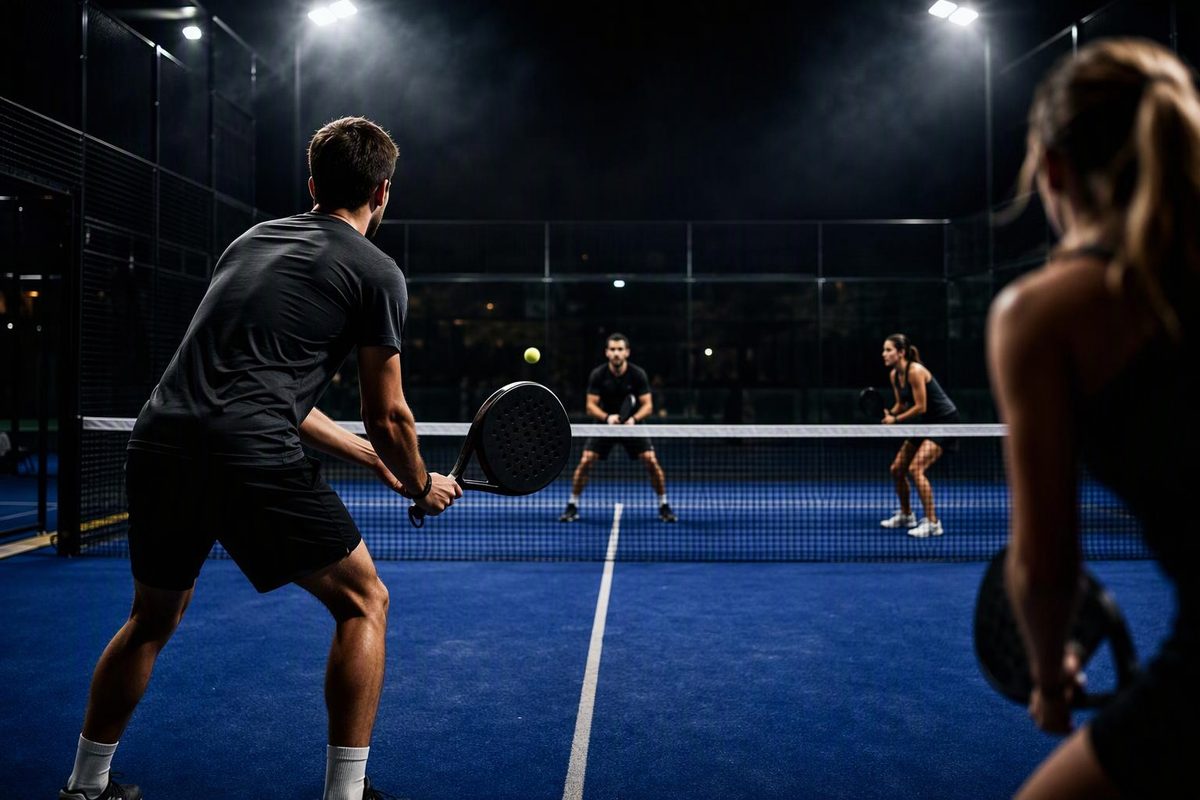
These serve receive drills practise the return of serve in padel: getting the ball back, reading the side glass and preparing for the next shot. Start with control rather than trying to hit a winner. As The Padel School explains, the return should start the point, not finish it.
Use four five-minute blocks. Two players can do the whole progression; four players make the final drill more realistic. With four, work in two-player turns for the first three drills, keeping the waiting pair clear of play. Treat the checkpoints below as practice goals, not grading standards.
Set up and check the bounce rule
You need a padel court, rackets and a few balls. Keep spare balls out of the playing area, and collect loose balls before the next serve.
The server serves diagonally into the receiver’s service box. Start at a pace that lets the receiver prepare without rushing. For these drills, the receiver starts just behind the service line, facing the server, with knees slightly bent and the racket in front. Leave room between your body and the side glass so you can turn and swing. This starting position is a practice choice, not a rule requiring receivers to stand behind the line.
Three rules matter throughout:
- Let the serve bounce in your service box before hitting it. You cannot volley the return.
- You may let it rebound from the glass after that bounce, but must hit it before its second bounce on the floor. The glass rebound does not reset the bounce count.
- A serve that lands in the correct box and then touches the metallic fence before its second floor bounce is a fault—not a glass return to practise.
These are the FIP rules applicable from 1 January 2026, Rules 7, 8 and 12.
1. Compact return to a broad target
Setup: Work on one diagonal. The server sends gentle serves away from the side glass. Choose a broad target through the middle of the opposite court, rather than near a sideline. Stop each repetition after the return.
Action:
- As the server strikes, make a small readiness hop—a split step—and land balanced, ready to move.
- Turn your shoulders and prepare the racket before the ball bounces. Keep the backswing short.
- Use small adjustment steps to meet the ball comfortably in front of your body.
- Return at controlled pace, then bring the racket back to your ready position.
Early preparation is especially useful against fast or low serves; it leaves you adjusting your feet rather than rushing the whole swing. The Padel School’s preparation advice emphasises having the racket ready before the bounce.
Checkpoint: Count returns landing in court out of ten valid serves. Aim for seven before increasing pace. Swap server and receiver halfway through the block; use the other diagonal for the second half.
Tennis habit to change: Keep the shoulder turn, but shrink the big groundstroke swing. This drill rewards a repeatable return, not pace.
2. Read the side glass
Setup: Choose one diagonal and keep the broad target. The server now sends gentle serves that bounce in the box and reach the side glass. Avoid the double-glass corner for this first progression.
Action: Begin with predictable serves and deliberately let them rebound from the side glass. Track the sequence: floor → glass → racket. Prepare before the first bounce, then adjust to where the rebound actually travels. Do not stand so close to the wall that your swing is trapped.
Once that feels manageable, the server mixes glass-bound serves with serves into open space. Choose either:
- Direct return: after the floor bounce, before the glass, when you have comfortable space.
- Glass return: after the rebound, when taking it earlier would crowd your contact.
Keep the return controlled; do not add speed just because the rebound feels unfamiliar.
Checkpoint: Note whether each miss came from crowding the glass, preparing late or waiting through a second floor bounce. Slow the serve down if the sequence is unclear. Swap roles and change diagonals halfway through.
If wall timing is the main obstacle, separate it from serving with these beginner rebounding drills.
3. Choose a low return or a lob
Setup: The server mixes comfortable serves into open space with lower or more awkward serves. After serving, they move towards the net so the receiver has a real opponent to read. Stop after the return.
Action: On a comfortable ball, practise a lob—a high shot over the opponent—aiming to land well inside the back of their court. When contact is rushed or cramped, practise a controlled low return towards the advancing server’s feet rather than forcing height.
This is a simple starting choice, not a rule that difficult serves can never be lobbed. A lob can buy recovery time or help your pair take the net. The Padel School’s lob-return guidance distinguishes high defensive lobs that buy time from attacking lobs played on easier serves.
Checkpoint: Record the choice as well as the result. Did you have time and space for the lob? Did the low return stay controlled? Swap roles and change diagonals halfway through.
4. Return, recover, play the next ball
Setup: With four players, the server’s partner starts near the net, and the receiving partner starts back. With two, use a cooperative sequence: the server follows the serve forward, volleys the return, and the receiver plays one more shot. This two-player version practises recovery, not a normal doubles point.
Action: With four players, play the point out. After returning, recover your balance and prepare for the opponent’s contact instead of watching your shot.
For the receiving pair:
- After a low return, stay organised at the back and prepare to defend the next volley.
- After a lob that gets over the opponents and makes them retreat, move forward together when there is time.
- If the lob is short and attackable, do not charge forward merely because you intended to lob.
For example: serve → controlled low return → opponent’s volley → your next defensive shot. The return has done its job by keeping you in the point.
Checkpoint: Give the receiving side one practice point for a legal return and another if the receiver is balanced and ready at the opponent’s next contact. Rotate roles halfway through. These are practice rotations, not changes to the receiving order during a match. For more detail on moving as a pair, use the doubles positioning guide.