
Attack the Rebound or Reset the Rally?
Use rebound height, space and preparation time: play a controlled bajada when organized; choose a lob when contact is low, awkward or rushed.
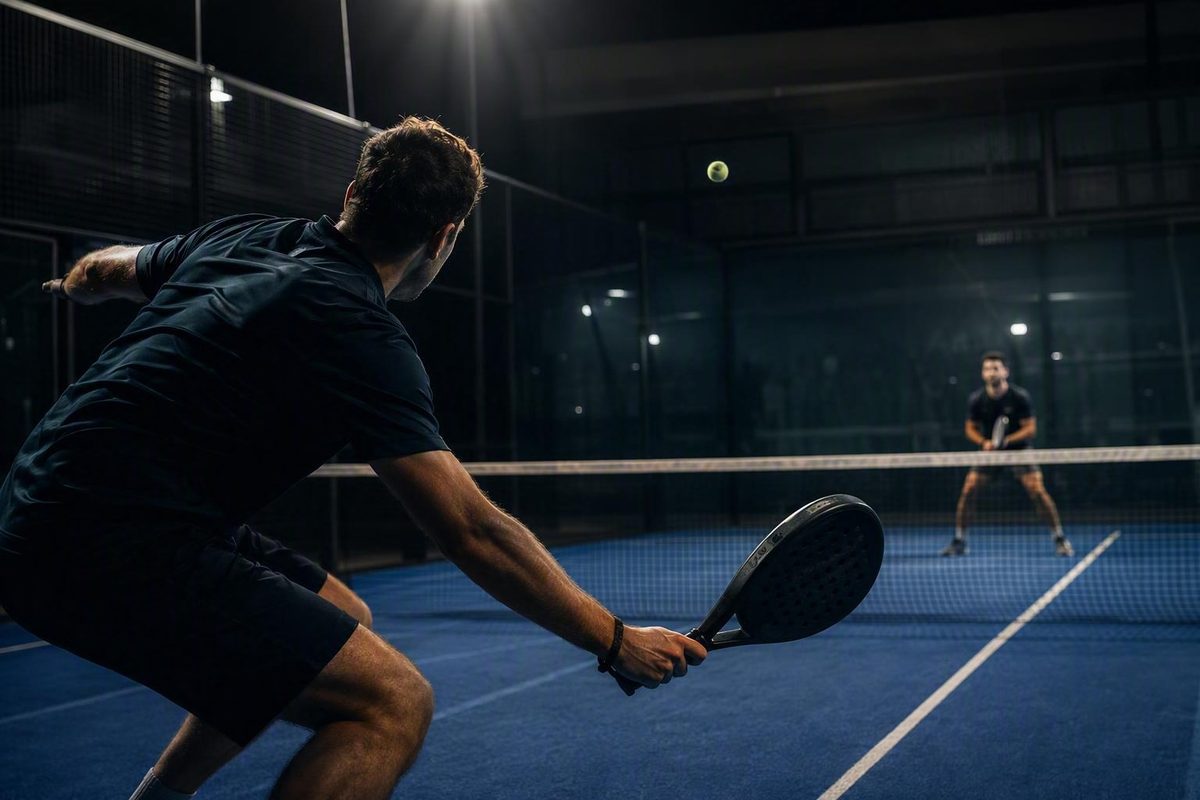
Choose a controlled bajada when the back-glass rebound gives you enough space and time to make a comfortable contact. If the rebound is low or awkward, traps you near the glass, or forces rushed preparation, favor a lob or another safe reset. Neither response is automatic: prioritize the shot you can control while recovering your court position.
Related: Padel Rules for Tennis Players.
The quick decision: bajada when prepared, lob when pressured
| What the rebound gives you | Your preparation | Practical choice |
|---|---|---|
| High or comfortably manageable contact with sufficient space | Time to organize and contact under control | Consider a controlled bajada |
| Low or awkward contact with restricted space | Rushed, cramped, or off balance | Favor a lob or another safe reset |
| Borderline ball or unreliable attacking technique | Uncertain control | Choose the shot most likely to stay in play and support recovery |
You also do not need to intercept every playable ball before it reaches the back glass. Letting it rebound may create more preparation time, allowing you to move, assess the contact and select a response. The LTA’s guidance for players adapting to padel highlights this additional time and emphasizes control and precision rather than indiscriminate power.
The practical decision is therefore based on the whole situation: the rebound, the room around you, the time available and the reliability of the shot you are considering.
What a bajada is—and what it is trying to achieve
A bajada is an attacking shot played after a lob rebounds from the back glass. Instead of making a purely defensive return, the player uses a favorable rebound to apply pressure.
The important word is controlled. An attacking intention does not require a maximum-power swing or an immediate winner attempt. The aim is to make the opponents handle a more demanding next ball without giving away your own reliability.
Recreational players discuss sliced, flatter and softer angled versions of the bajada. The available evidence does not establish any one version as the objectively best default. For a beginner, the most useful version is the one that can be prepared in time, contacted cleanly and directed with reasonable accuracy.
Those variations remain secondary to the basic purpose of the shot: turning a manageable rebound into controlled pressure.
Four checks to make before attacking
Before choosing a bajada, run through four quick checks.
1. Check the rebound. Is the ball rising into a comfortable contact, or are you reaching down, leaning sideways or improvising beside the glass? Do not search for an exact height threshold. Judge whether you can control this particular ball from your current position.
2. Check the space. Can you separate your body from the back glass and create room for an organized action? A ball may rise high enough to attack yet still leave you too crowded to execute the shot reliably.
3. Check the preparation time. Do you have time to judge the rebound and establish a controlled contact? An attack becomes less attractive if you are still scrambling as the ball arrives.
4. Check your control. Will added pace help you apply pressure, or make accuracy less likely? Excessive power can also send the ball toward the opponents’ glass in a way that gives them a convenient rebound. If pace is likely to undermine control, use a measured shot or reset.
These checks are a practical club-level decision aid assembled from coaching guidance, general glass-play principles and player discussion—not a formally validated rule. A simple internal question captures them: “Am I organized enough to attack this ball?”
Basic bajada preparation when the ball is attackable
Once you decide the rebound is attackable, create space between your body and the glass. Avoid becoming so crowded that you cannot organize the shot.
Move behind the ball when time permits, without forcing extra movement when preparation time is limited. Ely Padel Club’s bajada guidance identifies three basic cues: create space, get behind the ball when possible and make contact in front of the body.
From there, prioritize a clean strike and reasonable accuracy over maximum speed.
Those details depend on the player and the ball received. The transferable preparation cues are narrower: make room, organize when time allows, contact in front and retain control.
When the lob is the better reset
A low, awkward or rushed rebound is the clearest practical case for favoring a lob, although this remains a heuristic rather than an absolute rule. Recreational contributors discussing the bajada-versus-lob decision commonly point to rebound height, available space and the beginner’s need to keep the ball in play. Their recommendations are anecdotal player advice, not measured optimal tactics or expert consensus.
The lob is also the safer choice when you cannot separate from the glass or establish controlled contact in front of your body. Attempting a forceful attack from a cramped or off-balance position adds difficulty to a ball that is already demanding.
Tactically, the lob can extend the rally and create an opportunity for you and your partner to improve court position. It may push the opponents away from the net or provide recovery time, but it does not guarantee that your team will regain the net. Execution and the opponents’ response still shape the next phase of the point.
As a beginner coaching cue rather than a validated technical prescription, use enough margin to keep the ball playable, then recover together with your partner. There is no supported universal formula for the lob’s ideal height, depth, direction or target, so first solve the immediate problem: make a controllable return and prepare for the next shot.
Three common decision errors
Mistake one: treating every high rebound as a mandatory bajada. Height alone does not make the ball attackable. Space, preparation time and your ability to establish a controlled contact matter too.
Mistake two: equating attack with maximum power. A bajada is meant to apply pressure, but extra pace becomes counterproductive when it damages accuracy or produces a convenient rebound for the opponents.
Mistake three: following a fixed bajada-versus-lob percentage. Personal recommendations about how frequently to use each shot are not measured optimal tactics. The sensible choice changes with the rebound, your position and the reliability of your technique.
Pace, slice, angle and disguise can become useful variations as a player develops, but none is automatically superior. The beginner cue is simpler: attack only from an organized position; otherwise reset and stay in the rally.