
Know When to Run Around Your Backhand in Padel
Use the inside-out forehand in padel without sacrificing court coverage. Learn the footwork, wall cues and partner recovery that make it a sensible choice.
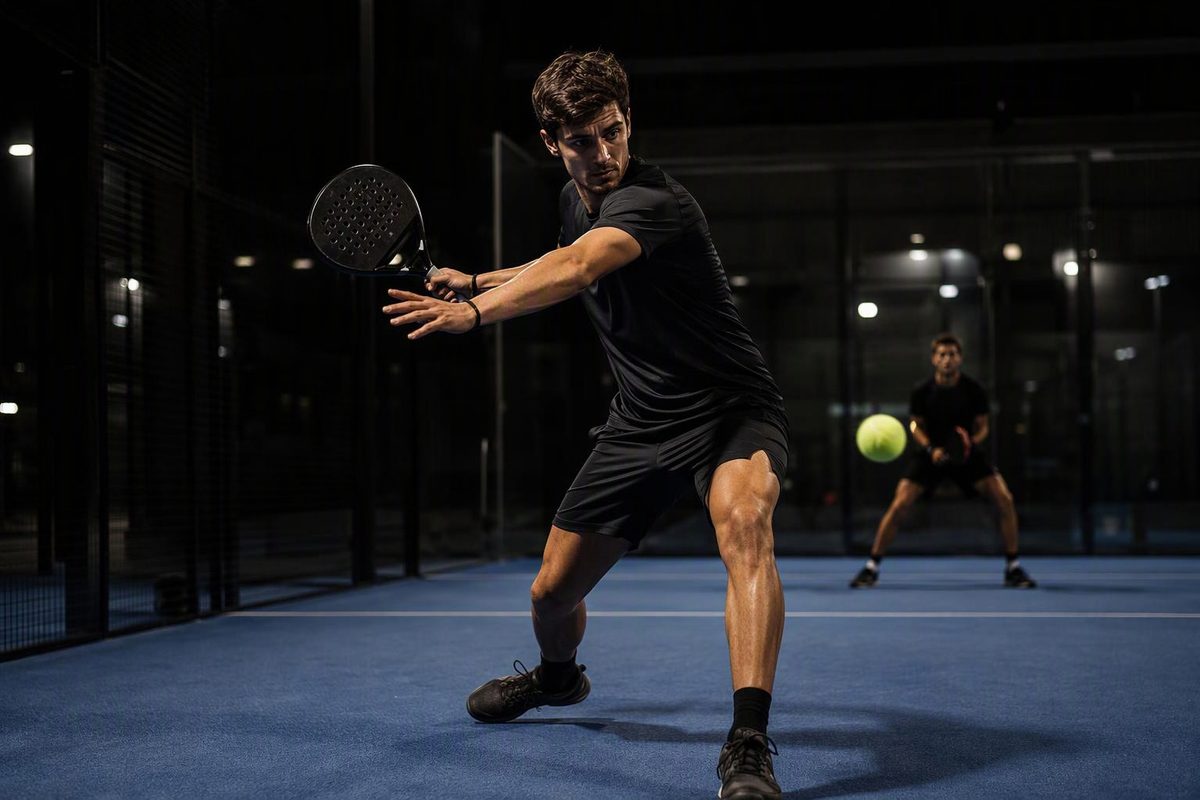
An inside-out forehand in padel means moving around a ball on your backhand side and hitting a forehand diagonally across the court. Use it when a slow, manageable ball gives you enough room to get balanced and recover with your partner—not whenever you would prefer to avoid a backhand. A right-hander moves left to create forehand space; a left-hander reverses that movement. From the same setup, hitting down the line is an inside-in forehand. These describe position and direction, not spin, as explained in the ITF’s tennis coaching review.
The movement transfers from tennis, but the decision needs to account for padel’s walls and doubles coverage. A forehand is not an improvement if getting to it leaves you cramped against the glass, late at contact or unable to cover the next ball.
Choose the ball, space and recovery conditions; the tool gives you a shot-selection checkpoint.
Inside-Out Shot Check
The starting selections describe a comfortable practice feed. Change them to match your ball.
Consider the Inside-Out Forehand
This setup gives you time, space and a workable recovery. Use a compact stroke towards a generous diagonal target, then recover with your partner.
A backhand is still a valid choice; this is an opportunity, not a requirement.
Source: article decision cues, informed by the ITF’s direction terminology and LTA guidance on groundstrokes and paired movement. Qualitative checkpoint, not a success prediction.
Use It Only When You Can Hit and Recover
For a beginner, the useful opportunity is a slow ball slightly to the backhand side that you recognise early. You should be able to create forehand spacing with short adjustment steps, finish the sideways movement before contact and return to a position that works with your partner.
That is different from chasing a wide ball and trying to manufacture a forehand at the last moment. The question is not simply whether your racket can reach the ball. It is whether you can reach it with enough separation from your body to make a controlled stroke, without taking space your partner needs.
Think of the decision as three checks: time, space and recovery. Enough time lets you prepare before the ball arrives. Enough space lets you swing without crowding your body or the glass. A workable recovery means the movement will not leave your pair badly positioned for the opponent’s reply.
| Situation | Better Choice | Reason |
|---|---|---|
| Slow ball, room to settle | Consider inside-out | You can create forehand space |
| Fast, wide or body-close ball | Keep the backhand | Avoid a late run-around |
| Deep ball approaching back glass | Read the rebound first | The wall changes the setup |
| Movement crowds your partner | Keep the backhand | Preserve shared coverage |
These are beginner decision cues, not a promise that a particular shot will win the point. A comfortable backhand remains a sensible choice even when an inside-out forehand is available. You are choosing between workable returns, not trying to prove that you can use your favourite side.
Read Deep Balls Before Committing to the Run-Around
A backhand-side ball does not always need an immediate direct stroke. If it is deep and heading towards the back glass, read the bounce and likely rebound before deciding where to move. The LTA’s groundstroke guide identifies depth and speed as the key beginner cues for choosing between a direct shot and a wall rebound.
That distinction matters before you start running around the ball. A movement planned for direct contact may leave you poorly placed if the useful contact instead comes after the rebound. Do not commit to making room for a forehand while still uncertain about where you will play the ball.
For players arriving from tennis, this is the main limit on transferring the habit. Recognising a ball on your backhand side is only the beginning of the decision. In padel, you also need to recognise whether you are dealing with it before or after the wall.
Once you have read the rebound, apply the same time-and-space test again. If the resulting ball gives you comfortable forehand spacing, the option may still be available. If you remain rushed or cramped, do not add a run-around just to avoid the backhand. The tool’s wall-ball result deliberately leaves that decision open rather than treating every deep ball as a forehand opportunity.
Make Space With Your Feet, Not a Bigger Swing
The footwork creates the inside-out opportunity; the stroke itself should stay compact. The LTA’s core forehand cues are a short backswing, contact in front and a controlled push through the ball. If those basics are not yet comfortable, work through our padel forehand guide before adding the run-around.
Turn Early and Leave Room for Contact
As you recognise a suitable ball, turn your shoulders and prepare the racket without taking a large backswing. Preparing early separates the stroke preparation from the final adjustment steps. You should not still be building the swing while scrambling sideways to find the ball.
For a right-hander, move left enough to bring the ball into a comfortable forehand contact position. For a left-hander, reverse the movement. The goal is not to travel as far around the ball as possible. It is to create the space needed for a balanced forehand.
Use short adjustment steps rather than one desperate sideways lunge. Watch for the difference between moving around the ball and moving into it: if the ball ends up pressed close to your body, you have not created useful forehand space. Trying to rescue that position with a larger swing defeats the purpose of choosing the shot.
Settle Before Guiding the Ball Diagonally
Get balanced before contact. You do not need a completely motionless setup, but a last-second sideways fall is a sign that the run-around was too ambitious for that feed. On the next similar ball, keep the backhand rather than repeating the same late movement.
Make contact in front and guide the ball through a generous cross-court corridor. Do not make the side-glass corner your beginner target. The objective is a controlled diagonal return with room for error, not a sharply angled winner from an awkward position.
Avoid forcing the direction with a late wrist flick. The useful change from a normal forehand is the positioning and diagonal intention, not a new wrist action. Keep the compact stroke you can repeat; if you cannot find the diagonal without improvising at contact, simplify the feed during practice.
Recover as Part of the Stroke
After contact, move back towards a position that covers the court with your partner. Do not admire the diagonal shot while remaining near the side wall. The run-around is only worthwhile if its recovery is manageable too.
Judge the movement by what happens after the ball leaves your racket. A return can land in court yet still leave you poorly placed for the next shot. In practice, make recovery part of the repetition rather than something you remember after the feeder has already sent another ball.
A Left-Side Example Shows the Full Decision
Imagine you are a right-hander defending on the left half of the court, with your partner defending on the right. An opponent sends a slow ball slightly to your backhand side. There is enough room between you and the side glass to move left without becoming cramped.
You recognise the feed early, move a little left and settle. From that setup, you play a controlled forehand diagonally into the half of the opponents’ court to your right as you face the net. That is the inside-out direction. A down-the-line shot from the same forehand setup would be inside-in instead.
The successful version does not end at contact. You recover from the left wall, and your partner adjusts with you to keep the middle covered. The LTA’s beginner guidance stresses moving as a pair and using placement rather than power. For the shared recovery pattern, see padel doubles positioning.
Now change just the feed: it arrives faster or farther to your left. The forehand that was comfortable on the slow ball may now require a late lunge or leave you too close to the glass. Keep the backhand. That is a good adjustment to a different ball, not a failed attempt at the inside-out forehand.
The example also explains why court position alone does not decide the shot. Being a right-hander on the left does not make every backhand-side ball suitable. The speed, available space and effect on your partner still determine whether moving around it is sensible.
Practise the Choice With Two Sets of Feeds
Have a partner feed from the opposite side of the net while you start in your normal defensive position. Choose a broad diagonal landing area safely inside the court boundaries. Ask the feeder to wait until you have recovered before sending the next ball; otherwise, the drill can reward hitting while neglecting the position you leave behind.
For the first 10 feeds, use slow balls slightly to your backhand side. Move around each manageable ball, play a compact inside-out forehand and recover. This opening set is for learning the spacing, not for testing how wide a ball you can turn into a forehand.
Keep the diagonal target generous. If you are repeatedly crowded at contact, make the feed easier so you can understand where to place your feet. Do not respond by making the backswing bigger or flicking the wrist harder to find the angle.
For the next 10 feeds, mix comfortable balls with faster or wider backhand-side feeds. Use the forehand only when you can get balanced; otherwise, play the backhand. The feeder should vary the opportunity rather than announce which stroke you must use.
Count a repetition as successful only when you choose appropriately, keep the return in court and recover ready for another ball. A backhand can therefore be a successful repetition in the mixed set. Conversely, an inside-out forehand that lands in but leaves you stranded does not meet the drill’s full objective.
This separates two skills that are easy to confuse: executing the diagonal forehand and recognising when to attempt it. The slow set gives you a repeatable setup. The mixed set checks whether you can let that setup go when the ball no longer allows it.
Fix the Decision Before Changing the Technique
If contact repeatedly feels jammed, first check whether you moved into the ball instead of creating separation. Then check whether the feed was too fast or too close to the glass for the movement you attempted. A cramped forehand is not automatically evidence that your swing needs more work.
If you can hit the shot but cannot recover, reduce the ambition of the run-around. Return to balls only slightly on the backhand side and include your partner’s position in the decision. You are looking for a small, useful adjustment—not permission to roam across the pair’s defensive space.
If the technique works on slow feeds but disappears in the mixed drill, keep practising the choice. The standard is not using the forehand more often. It is recognising the comfortable opportunity and declining the rushed one. Keep the backhand when the ball is fast, wide or body-close; read deep wall-bound balls before committing; use the inside-out forehand when you can create space, guide the diagonal and recover together.